The Weight of Lightness, 2026
Medium: Handmade paper from recycled atlas pages and gauze fibers
Installation site: Museo delle Mura, Rome
Collaboration: Grace Xu(USA)
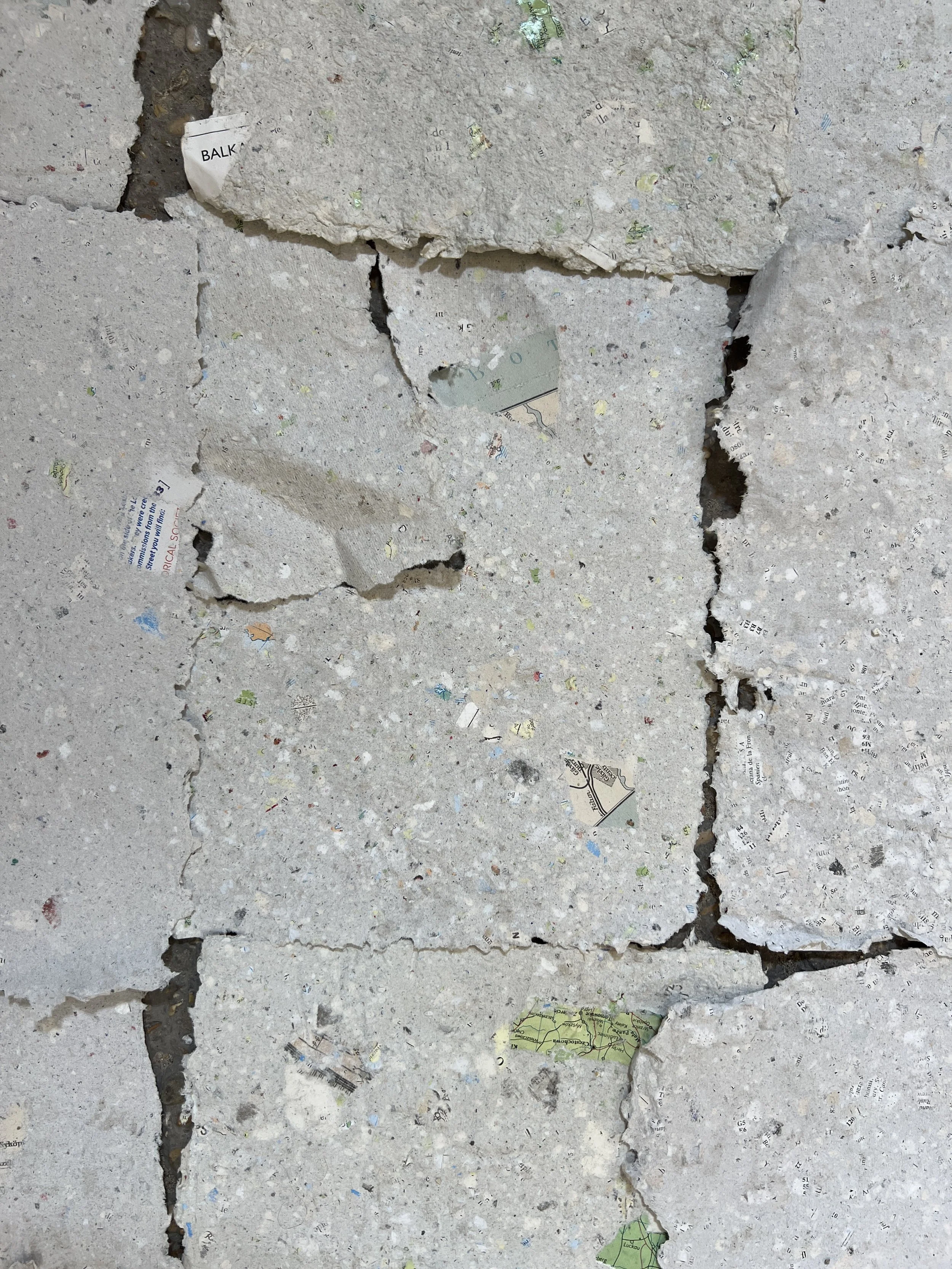
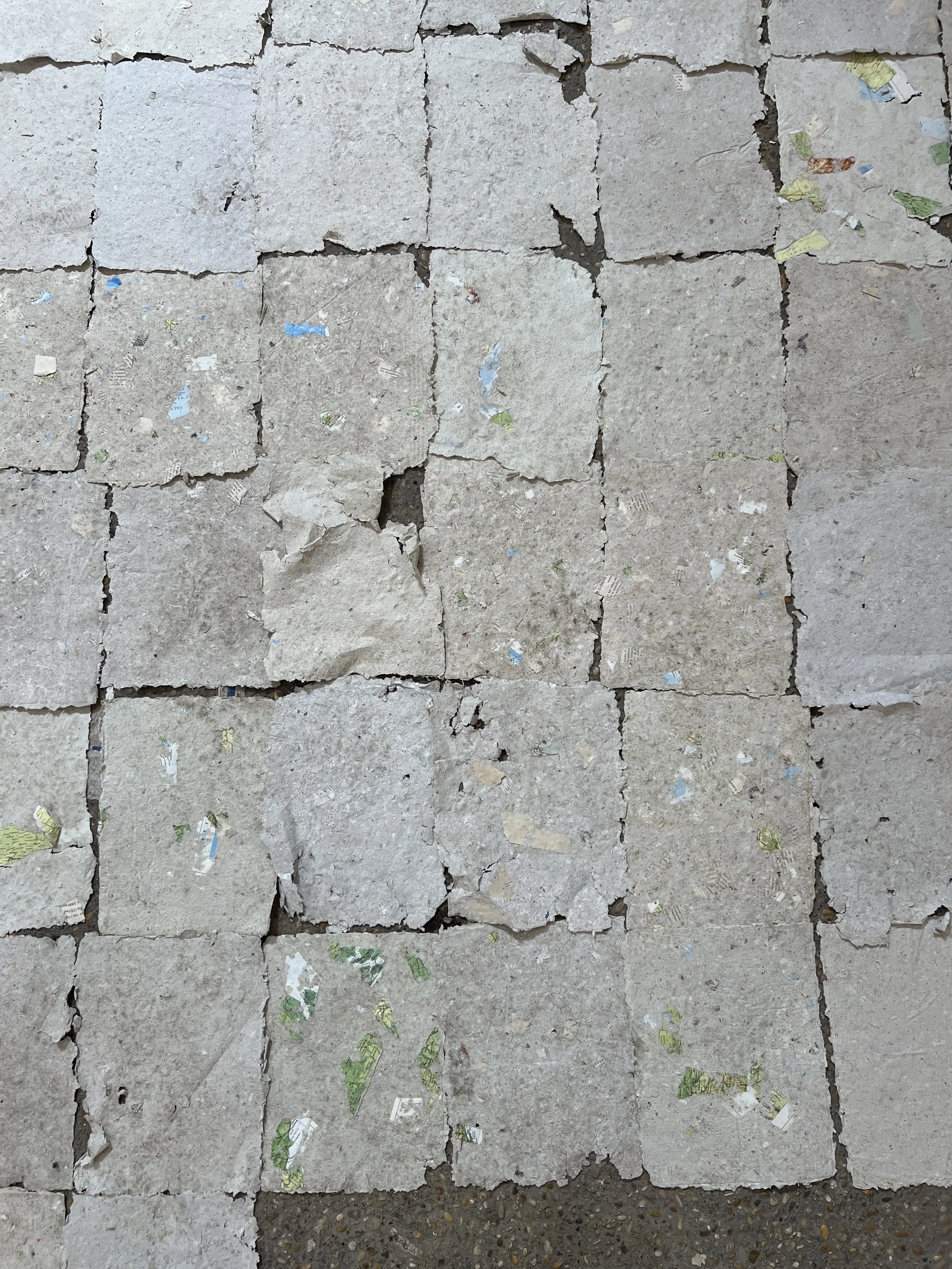
The Weight of Lightness is a floor-based installation composed of handmade paper created from pulped atlas pages and gauze fibers. The work emerges from a process in which printed maps—objects traditionally used to stabilize geography and borders—are physically dissolved and reconstituted into fragile sheets of paper.
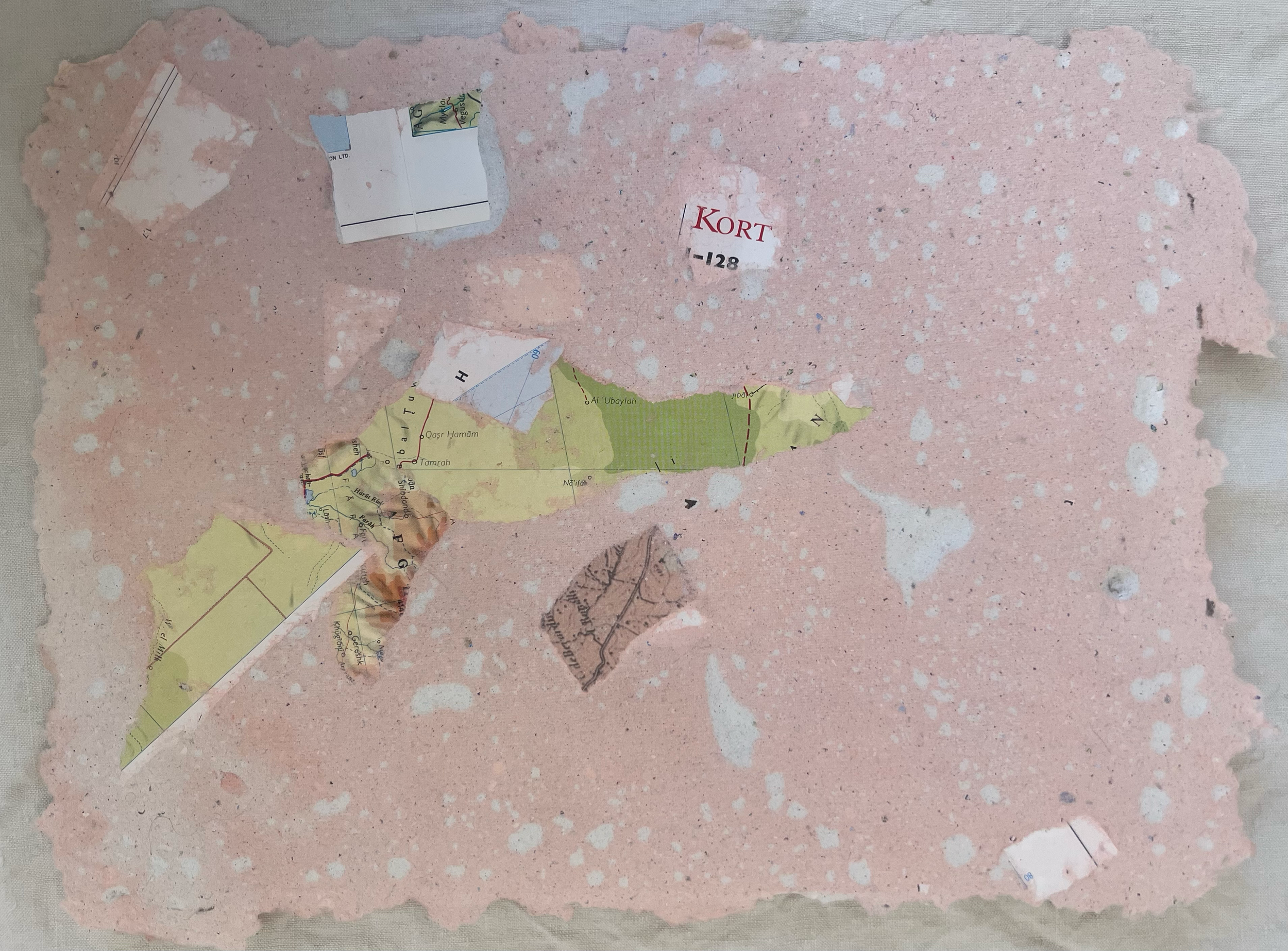
The atlas material used in the work came from both myself and Grace Xu, bringing together personal geographies through shared making. I contributed atlas pages from Denmark, as well as an atlas purchased at a bookstore in Rome. Grace Xu contributed printed materials collected from cultural spaces in San Francisco, including cultural event leaflets, catalogs, and related ephemera. These different sources—Northern Europe, Italy, and the United States—were soaked, crushed, pulped, and dried into new paper surfaces. Through this act, distinct territories and histories merged within the same material body.
The paper was produced at Circolo Scandinavia, the artist residency where I was staying while preparing for my solo exhibition at Museo delle Mura. The residency became both studio and laboratory, allowing the transformation of maps into tactile, fragile matter. Faint traces of the former cartographies remain visible in the finished sheets: fragments of color, fibers, and sediment-like textures embedded within the surface. Through this transformation, maps lose their authority as tools of orientation and instead become fields of memory and material residue.
What is equally important is that behind the apparent lightness of the finished paper lies an accumulation of labour, movement, and hidden histories. The making of the work involved long processes of searching, collecting, transporting, soaking, crushing, pulping, and drying. Lightness here is not immediate—it is earned through process.
Many of the atlas books and maps already carried their own lives before entering the work. Some were found through secondhand websites, leading me to travel across different parts of Copenhagen to meet sellers in person. These encounters often became moments of storytelling. One seller spoke of an atlas inherited from a great-grandfather; another described books passed down through parents; others had kept them on shelves for decades before letting them go. In this sense, the materials arrived already marked by memory, domestic life, migration, and generational passage.
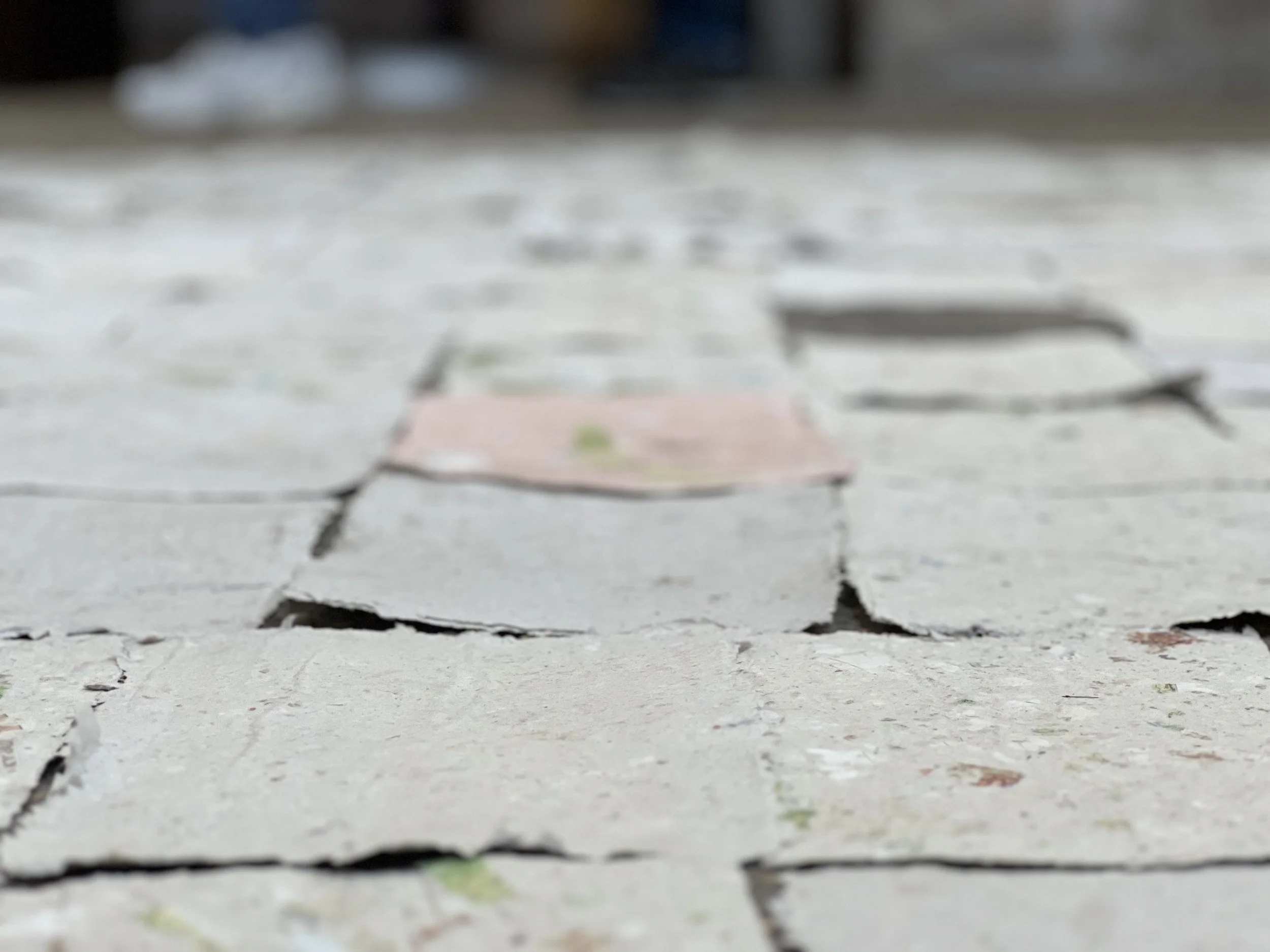
Installed directly on the floor within one of the stone towers of the Museo delle Mura in Rome, the paper forms a dispersed ground of delicate fragments. Each sheet rests lightly on the surface, creating a quiet field that contrasts with the heavy permanence of the surrounding architecture. The work places softness against stone, fragility against monumentality, allowing the material to exist in tension with the historical structure that contains it.
The title The Weight of Lightness reflects this paradox. Although the paper appears delicate and almost immaterial, it carries the density of multiple histories—geographies once separated by borders but now physically blended through the act of pulping and reforming. It also carries the weight of labour, encounters, and inherited objects whose stories remain embedded within the fibers. The work suggests that even the lightest surfaces may hold the accumulated burden and beauty of movement, displacement, and memory.
Rather than presenting a map to be read or navigated, the installation offers a surface to be encountered. The fragmented sheets evoke traces of landscapes, sediments, archaeological remains, or weathered skins, suggesting that geography is not fixed but continually rewritten through time and experience.
The work also connects to my long-standing interest in handmade paper as both medium and metaphor. Years earlier, this interest was deeply renewed after encountering Fitra Rahardjo’s handmade paper works made from collected cigarette boxes at Semerak Gallery, Jakarta, in 2023. The delicacy of the surfaces, their uneven textures, and the quiet beauty of transformed discarded materials left a lasting impression. That encounter affirmed the poetic potential of paper as something fragile yet enduring, humble yet capable of carrying memory.
This material investigation extends into other conceptual explorations within my practice. A related project, Gravity of Time, first appeared as a conceptual image in my artist book The Absence Me (2026), where fragile structures and temporal processes further examine the relationship between weight, transformation, and the passage of time.
In The Weight of Lightness, geography dissolves into matter, borders collapse into fibers, and maps become fragile skins of paper—light in appearance, yet carrying the quiet gravity of many journeys.